

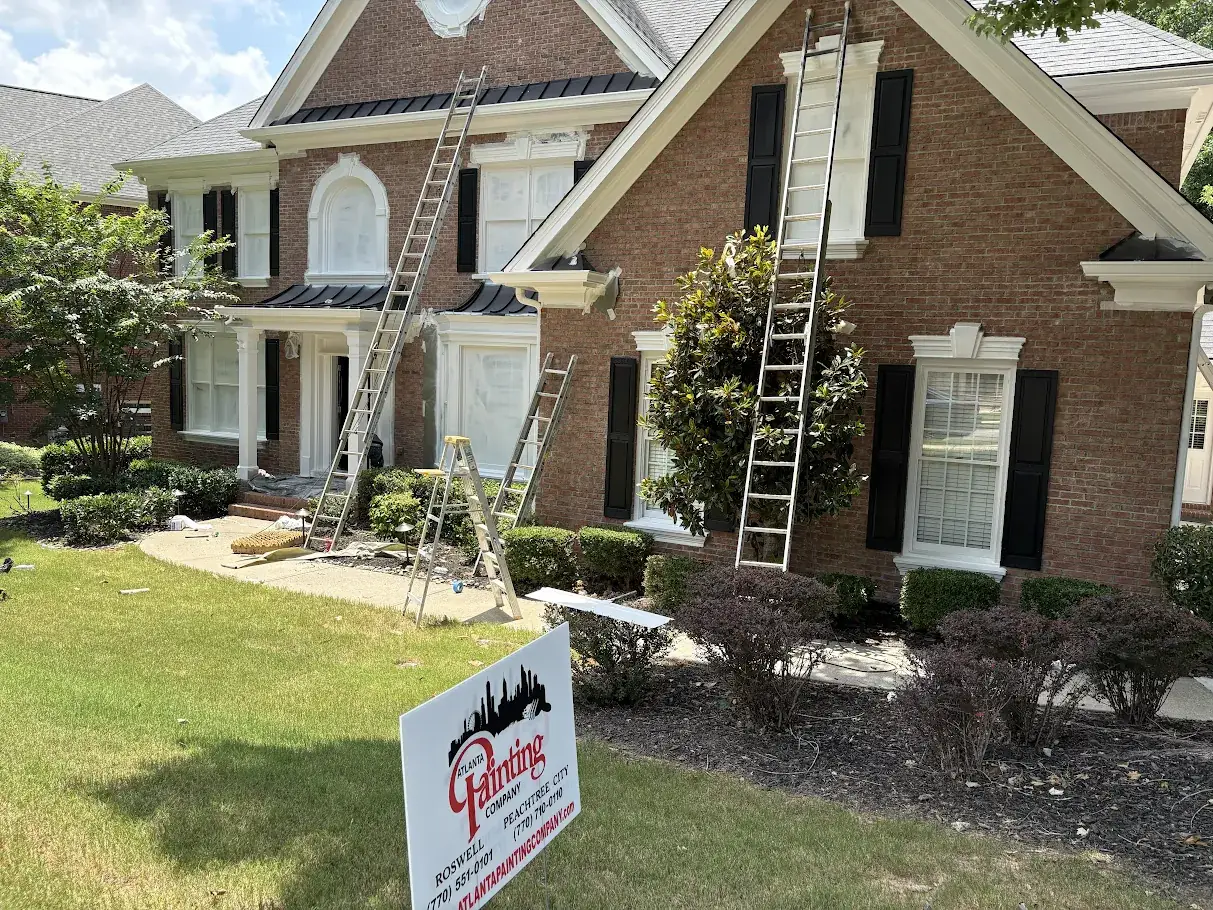
What humidity does to a coat of paint
Paint has to dry and then cure. On a muggy Atlanta day the water in a latex coat leaves slowly. Evening dew can land on a film that has not set, and that film stays soft. It chalks, streaks or peels early. Moisture already in the siding, the trim or the stucco pushes the other way, from behind the paint, and that is what raises blisters. A wall that was damp when it was coated often looks fine for a short stretch and then fails on the shaded side first.
Shaded walls under oaks and pines stay damp the longest. That is the pattern on lots in Peachtree City, Roswell and Canton, and it is the same under the mature trees around Marietta, Johns Creek and Alpharetta. Mildew and algae show there before they show on a south wall in full sun. A green film low on the north siding, or on the back of a chimney, is usually moisture plus shade.
The same thing happens on low office buildings. A covered north wall, a recessed entry or a loading area that never gets direct sun stays wet after the rest of the building has dried. We see chalking and failed sealant on those walls for the same reason we see it on a shaded gable: the surface spends too many hours damp. Houses and small commercial buildings in those office areas share the weather. The prep is what changes, because a storefront and a house wall are different substrates, and each one needs the primer matched to it.
Dew, season by season
If the siding has cooled to the dew point, moisture is sitting on it even when the air feels pleasant. We wait until that film has burned off before the first coat, and we stop early enough in the afternoon for the coat to set before evening dew returns. A wall that is still cool in the shade waits, including a wall that feels dry to the hand. Follow the temperature and the dry time on the can for both the air and the surface. We do, on the Sherwin-Williams and Benjamin Moore exterior acrylics we use.
Spring adds pollen to the moisture. Pine and oak dust sticks to a damp wall and to a coat that is still soft. We wash after the heavy pollen drop, then coat, the same way we wash off the red clay splash that rain leaves along the foundation. In summer the air often stays muggy into the evening, so a coat can stay soft, and a west wall in full sun can skin over before the film has set. That kind of moisture damage can show up in any season if the wall was coated wet. The calendar, including which months we book first, is in when to paint a house exterior in Atlanta.
Products and prep that keep water out
The coating has to match the climate and the surface:
- Exterior acrylics from Sherwin-Williams and Benjamin Moore.
- Primers matched to the substrate, including stain-blocking primers on cedar and bare wood.
- Breathable mineral paint such as Romabio on brick and masonry, so water is not trapped in the wall.
- An elastomeric or masonry coating on cracked stucco where the surface calls for it.
Prep is the other half. We wash off pollen, mildew and red clay, then let the wall dry. Soft wood is replaced, gaps are caulked, bare spots are primed. Most of the early failures we are called to look at were coated over a dirty or damp surface. Paint will not bridge a rotten board or an open joint.
Upkeep between repaints
A sound coat still needs ordinary care in this climate:
- Rinse pollen, mildew and clay off siding and trim when they build up, especially after pollen season.
- Keep gutters clear so water does not sheet down the walls.
- Trim shrubs and branches back so the walls can dry.
- Touch up cracked caulk and chipped trim before water gets behind the film.
If paint is peeling in sheets, wood is soft, or algae comes back right after a wash, the problem is under the paint. Our exterior painting crews handle the repairs and the coating together, and every job carries our 3-year warranty on labor and materials. Houses in Peachtree City and the surrounding area can start with the Peachtree City office. Call (770) 551-0101 and we will look at the wall before anyone talks about a color.